Suveniri

Sand Martin Day Celebrated in Đelekovec

Sand martin population in Croatia drops from 30,000 pairs to fewer than 4,000 over the past 30 years

Đelekovec, 9 June 2025 – Over the weekend, the Sand Martin Day was celebrated on the banks of the Drava River near Đelekovec as part of the Municipality Day festivities. The colony of this endangered bird species at the Lubenovec site, downstream from Legrad, is one of the largest along the Drava River. In recognition of this, the village of Đelekovec was named Croatia’s first “Sand Martin Village” in 2024. This title highlights the importance of preserving natural habitats and showcases the successful collaboration between the local community, farmers, and environmental experts.

Sand martins – key indicators of healthy river ecosystems

Sand martins (Riparia riparia), Europe’s smallest swallows, nest exclusively in steep sandy riverbanks. Their presence is an important indicator of the health of river ecosystems. Unfortunately, their population in Croatia has declined from around 30,000 to fewer than 4,000 pairs over the last three decades.

The main causes of this decline include the loss of natural habitats due to river regulation, excessive pesticide use, draining of wetlands (which reduces insect populations), and human disturbance during the nesting season.

Education and community engagement are key to protection

Visitors had the opportunity to attend a presentation by a representative of the DRAVA LIFE project, participate in a creative workshop, and join a boat ride organized by the Rafting Club Koprivnica — all offering a closer look at the life of sand martins. The event emphasized the importance of responsible behavior near nesting colonies — such as avoiding noise, keeping a safe distance, and following guide instructions during the nesting period (late April to mid-July).

A key example of good practice is the collaboration between the Municipality of Đelekovec, the Puhar family farm, WWF Austria, and Croatian Waters. Through lease agreement adjustments, natural erosion of the Lubenovec riverbank is enabled, creating new suitable nesting habitats each year. This initiative stands as a model for successful cooperation between the local community, agriculture, and nature conservation professionals.

Special recognition goes to the school cooperative “Mak” from Đelekovec, whose project “Sand Martins in the Embrace of the Drava” qualified for the National Student Cooperative Fair. Students created educational and creative products to raise awareness about the importance of preserving this species.

DRAVA LIFE – Integrated River Management

The DRAVA LIFE project focuses on improving river ecosystems in Croatia, particularly in areas that are part of the Natura 2000 ecological network. By restoring the river’s natural dynamics and fostering cooperation among institutions, NGOs, and the local community, the project contributes to the protection of endangered species and habitats — while also helping to safeguard populated areas from flooding.

Photos Mladen Međimorec and Iva Naglić Dolić
G. Šafarek
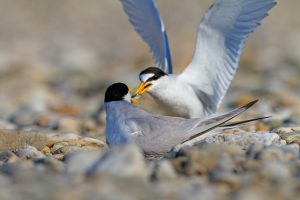
Mala čigra / Little tern (Sterna albifrons) © G. Šafarek

Let’s protect the homes and young of little terns

Little Tern – Ambassador of the Drava River 

Koprivnica, May 8th, 2025 – The Little Tern (Sternula albifrons), one of the rarest breeding birds in Croatia, is returning to the gravel and sandbars of the Drava River to raise its offspring. These extremely sensitive birds depend on natural, untouched gravel and sand islands in the river—habitats that are increasingly threatened each year due to human impact.

Members of the DRAVA LIFE project team appeal to all visitors of the Drava River to avoid walking on sandbanks from mid-April to the end of July! With your attention and responsibility, you allow little terns to peacefully nest and raise their chicks, contributing to the conservation of this strictly protected species.
The little tern is a symbol of a living, natural river. Its survival speaks to the health of the river ecosystem shared by other endangered birds such as sand martins, kingfishers, and bee-eaters. Unlike the common tern, the little tern refuses to nest on artificial platforms and is exclusively bound to natural river environments.


Characteristics and Habitat

The Little Tern’s body is slender with narrow wings and a forked tail, perfectly adapted for fishing in rivers and seas. The chicks are gray-brown-yellow in colour, making them almost invisible on gravel and sandy islands without vegetation. In Croatia, they nest only on the Drava River in Koprivnica-Križevci County (with an average of 4-7 pairs), while the rest of the population nests along the coast. The presence of Little Terns indicates natural dynamic sections of the river flow with sandy and gravelly shoals, steep banks, and backwaters. It hunts small fish in shallow water zones along the riverbanks.

Threats and Protection

Mala čigra / Little Tern © Goran Šafarek

Mala čigra / Little Tern © Goran Šafarek

This strictly protected species is threatened by river regulation and hydroelectric power plants, extraction of gravel and sand, human disturbances such as rowing, fishing, swimming, etc.

The Little Tern is strictly protected under Croatian and European legislation and international conventions. It is protected according to the Nature Protection Act (OG 80/13, 5/18, 14/19, 127/19, 155/23) and the Ordinance on Strictly Protected Species (OG 144/13 and 73/16). It is included in the Croatian Red Book of Endangered Birds and is internationally protected under the EU Birds Directive (Annex I), the Natura 2000 network, and the Bern and Bonn Conventions.

It is prohibited to:
• Capture or kill them
• Disturb them, especially during breeding season
• Destroy or take eggs
• Deliberately destroy, damage, or remove nests
• Damage or destroy breeding or resting areas

Mala čigra / Little Tern © Goran Šafarek

Our Responsibility
To preserve the last breeding pairs of Little Terns, it is necessary to restore the natural river’s dynamics and allow the Drava to create new gravel and sand bars and prevent disturbance of birds during the nesting season. This was one of the main goals of the DRAVA LIFE project, in which Hrvatske vode, WWF, Association for Nature and Environment protection Green Osijek and Nature Protection Institutions of Koprivnica-Križevci, Virovitica-Podravina and Varaždin County have joined forces and worked together to create a best practice example of river restoration in Croatia and the region.

We also emphasize the importance of protecting the Drava River and protected areas within the County, especially the Mura-Drava Regional Park, which is part of the Natura 2000 area and the Five-country Mura-Drava-Danube Biosphere Reserve.

We can all be nature guardians! We invite everyone to join in protecting the unique habitats and species of our environment and to support the conservation of one of the last populations of Little Terns on the Drava!

You can find more info here The little tern leaflet.

Hrvatske vode

Works at Location C.1. Otok Virje

C1 Otok Virje

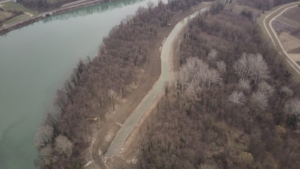
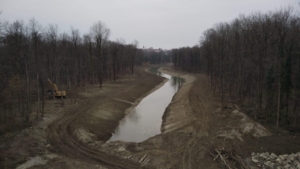
We would like to inform you that restoration work on the right branch of the Drava River near the village of Otok Virje is nearing completion, as part of the DRAVA LIFE project. As announced during the public event held last September in the Municipality of Cestica, the aim of this project is to improve water flow, give the river more space, restore natural habitats, and reduce flood risk. The restoration covers the section between river kilometers 312 and 314.

Why are parts of the vegetation and bank reinforcements being removed?
🔹 The Drava is a living river that depends on natural processes to breathe and regenerate. Currently, this river branch is filled with sediment and overgrown with vegetation, which restricts water flow and threatens rare plant and animal species.

What’s being done?
🔹 The branch is being deepened and excess vegetation removed to improve flow
🔹 Sections of artificial bank reinforcement are being removed to restore natural river dynamics
🔹 Riverbanks are being stabilized using bioengineering techniques
🔹 Excavated material is being reused to build access roads

These interventions will help make the Drava more natural and biodiverse, while also making the surrounding area safer from flooding and more enjoyable for recreation.

By enabling the river to regenerate on its own, we are creating new habitats for birds and other wildlife and improving flood resilience in both Croatia and Slovenia.

Thank you for your understanding!


Is the Return of Myricaria germanica to the Drava Possible?

At this stage, a definitive answer to the question posed in the title remains uncertain; however, based on prior reintroduction efforts, there is cautious optimism.

Myricaria germanica (German tamarisk) was once a common shrub on the gravel and sandbanks of the Drava River. However, due to extensive hydrotechnical interventions and subsequent alterations in habitat conditions, the species has disappeared from its natural sites along the river.

In response, a series of restoration activities aimed at re-establishing Myricaria germanica in its native habitat along the Drava River was initiated several years ago.

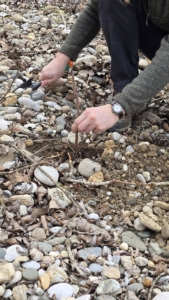
Monitoring of individuals planted in previous periods has led to the identification of micro-sites that appear to offer slightly more favorable conditions for the growth and survival of Myricaria germanica. In early March of this year, additional nursery-grown specimens—propagated at the Arboretum Opeka Secondary School in Marčan—were planted at these locations.

Unfortunately, the newly established plants face a range of threats in their new habitat, including unfavorable weather conditions, sudden fluctuations in water levels, sediment dynamics, herbivory by wild animals, and damage caused by irresponsible off-road vehicle use. It is therefore evident that, alongside careful site selection and management, a measure of luck will also be necessary for the success of the reintroduction effort.

Restoration Works Underway on the River Branch near Botovo Bridge

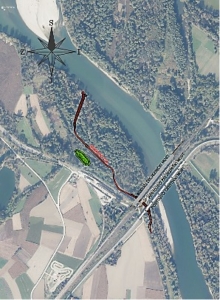
We inform you that restoration of a branch of the Drava River, spanning 830 meters, is currently underway in the municipality of Drnje. The goal is to improve the river’s flow, reduce bank erosion, and create better conditions for aquatic ecosystems.

The works will continue until the end of winter and will be completed after the construction of the Botovo railway bridge is finished. This will reconnect the river branch with the main course of the Drava, ensure better water flow, raise groundwater levels in floodplain forests, and promote the development of new, dynamic, targeted habitats.

Stay with us for more updates!

Photos Hrvatske vode