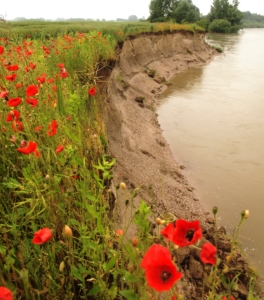
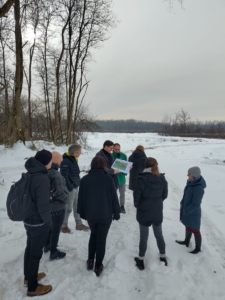
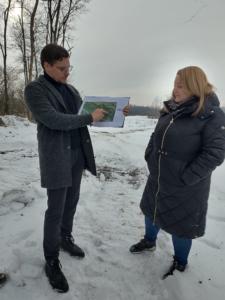
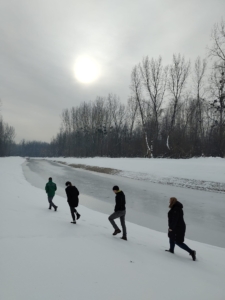
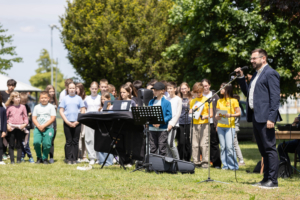
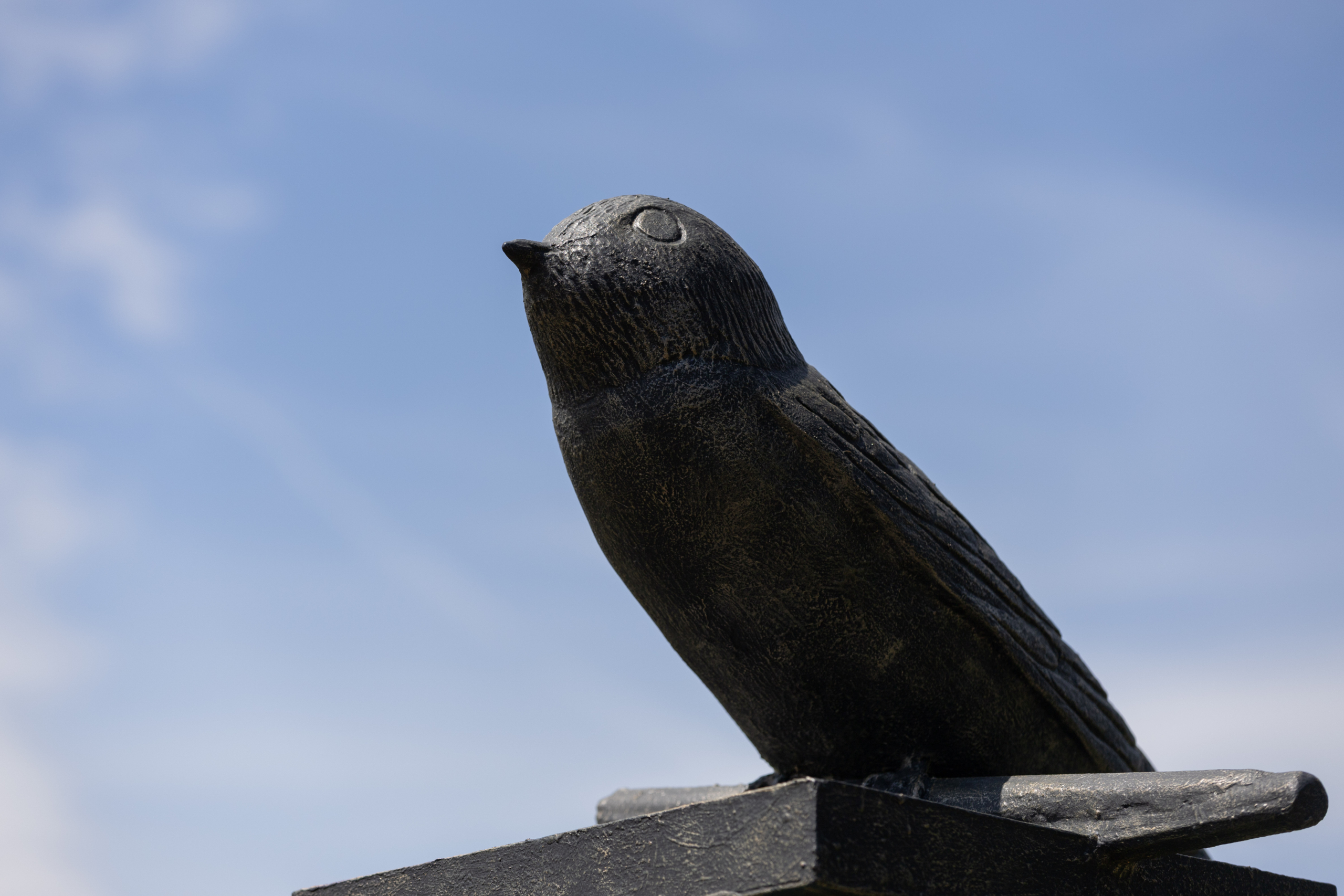
Đelekovec, 14 May 2026 — A sculpture dedicated to the sand martin, created by master ceramicist Dragutin Ciglar Lao, was ceremonially unveiled in the central park of Đelekovec. The sculpture stands as a lasting tribute to the sand martin colony that nests each year in the steep sandy bank of the Drava River at Libanovec, proving year after year that coexistence between people and nature is not merely an ideal, but a reality.
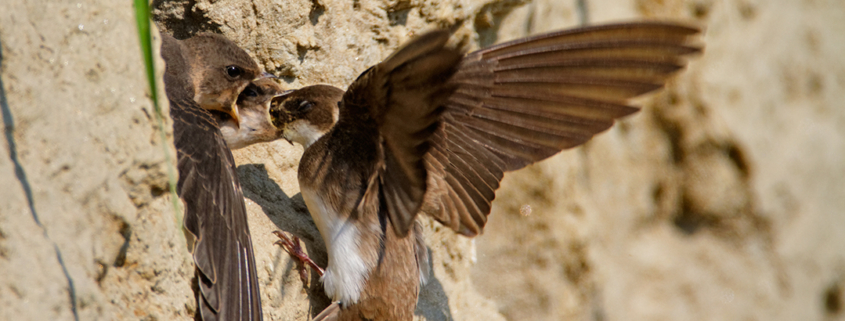
The sand martin (Riparia riparia) is a strictly protected migratory species that travels more than 6,000 kilometres from central Africa to nest in the steep sandy banks of European rivers. Where sand martins nest successfully, rivers retain their natural dynamics — which is precisely what makes the species one of the most reliable indicators of a healthy river ecosystem. The colony at Libanovec is one of the few that has recorded a positive population growth trend over the past decade.
Đelekovec was designated Croatia’s first Sand Martin Village in 2024, a unique recognition that followed years of dedicated collaboration between the local community, family farm OPG Puhar, Croatian Waters and nature conservation organisation WWF Austria. The sculpture is now the physical expression of that status: a public, visible, permanent sign that this part of Podravina cares for its river and the life it sustains.
The event was opened by Lara Samošćanec Kiš, Mayor of the Municipality of Đelekovec, with the words: “When we received the status of Croatia’s first Sand Martin Village in 2024, we knew it wasn’t the end of the story — it was the beginning. This sculpture confirms something we believe: that a small community can take responsibility for the nature that surrounds it and be an example to others. We achieved this status together — residents, the school, the kindergarten and local associations. This sculpture is not just a statue in a park; it is a message that this community knows what it has and values it. That is an identity we are building through our history and passing on to the youngest generation.”
Nikola Cik, Director of the Tourism Board of the “Central Podravina” area, addressed those present: “Central Podravina has one of the most beautiful and healthiest rivers in Europe, but a river alone does not make a tourism story. The story is created when a community is woven into it. Đelekovec has told that story authentically: the sand martin has become a symbol that attracts visitors, educates children, inspires artists and has sparked an entire small ecosystem of creativity. The sculpture in the park now becomes a landmark on the Podravina map that we will show with pride. And I hope it will be an encouragement to other communities along the Drava to find their own story worth preserving.”

Tanja Nikowitz
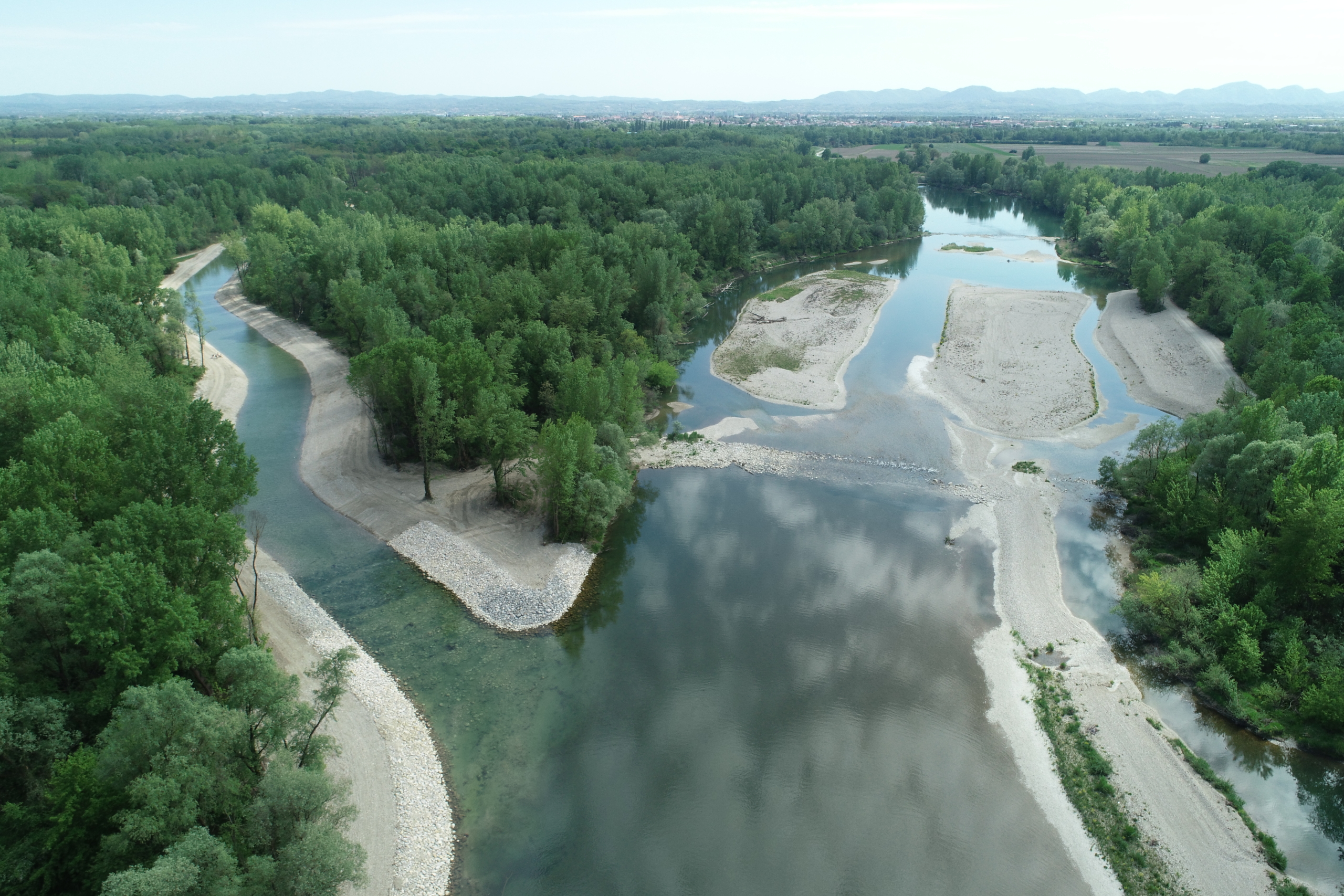
“In the area of the UNESCO Five-Country Biosphere Reserve Mura–Drava–Danube, sand martin populations are declining. Rivers are losing their natural dynamics, banks are being reinforced and birds are losing their nesting sites. Đelekovec is moving in the opposite direction, and that is no coincidence,” said Tanja Nikowitz, nature conservation expert at WWF Austria, adding: “It is the result of a conscious community decision to give the river room. The colony at Libanovec is one of the few in the region that is growing, and that is why Đelekovec is more than an example of good practice: it is proof that recovery is possible! May the sculpture unveiled today be an invitation to other municipalities along the Drava to recognise the value of the river flowing beside them and of healthy, protected nature.”
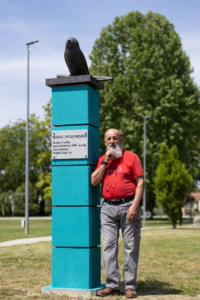
Dragutin Ciglar Lao
“Every sculptor dreams at some point that their work will become part of a place — not just an ornament, but a sign. When I was asked to create a sculpture of the sand martin for Đelekovec, I knew this was exactly that kind of opportunity. This bird is not only beautiful — she is a messenger of the river. The work I created is not mine alone; it belongs to everyone who has protected that bank for years, who has watched the colony grow and who has understood what that means. It means a great deal to me that this sculpture will now remain in Đelekovec — forever,” concluded master ceramicist Dragutin Ciglar Lao, the author of the sculpture, who also created sand martin-themed souvenirs for the Tourism Board of the “Central Podravina” area.
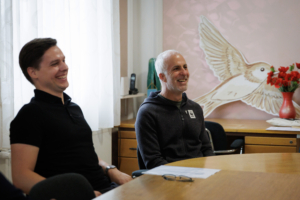
A rich programme was prepared by pupils of the Mihovil Pavlek Miškina Primary School, members of the Vêndi Association for the Preservation of Natural and Cultural Heritage, Culture, Art and the Promotion of Rural Tourism, and Stjepan Žagač on guitar. Following the unveiling, an exhibition of artworks on the theme of sand martins was opened in the school premises — after Đelekovec, the exhibition will tour other towns and municipalities.
Photography: Marko Lorenzo Blaslov



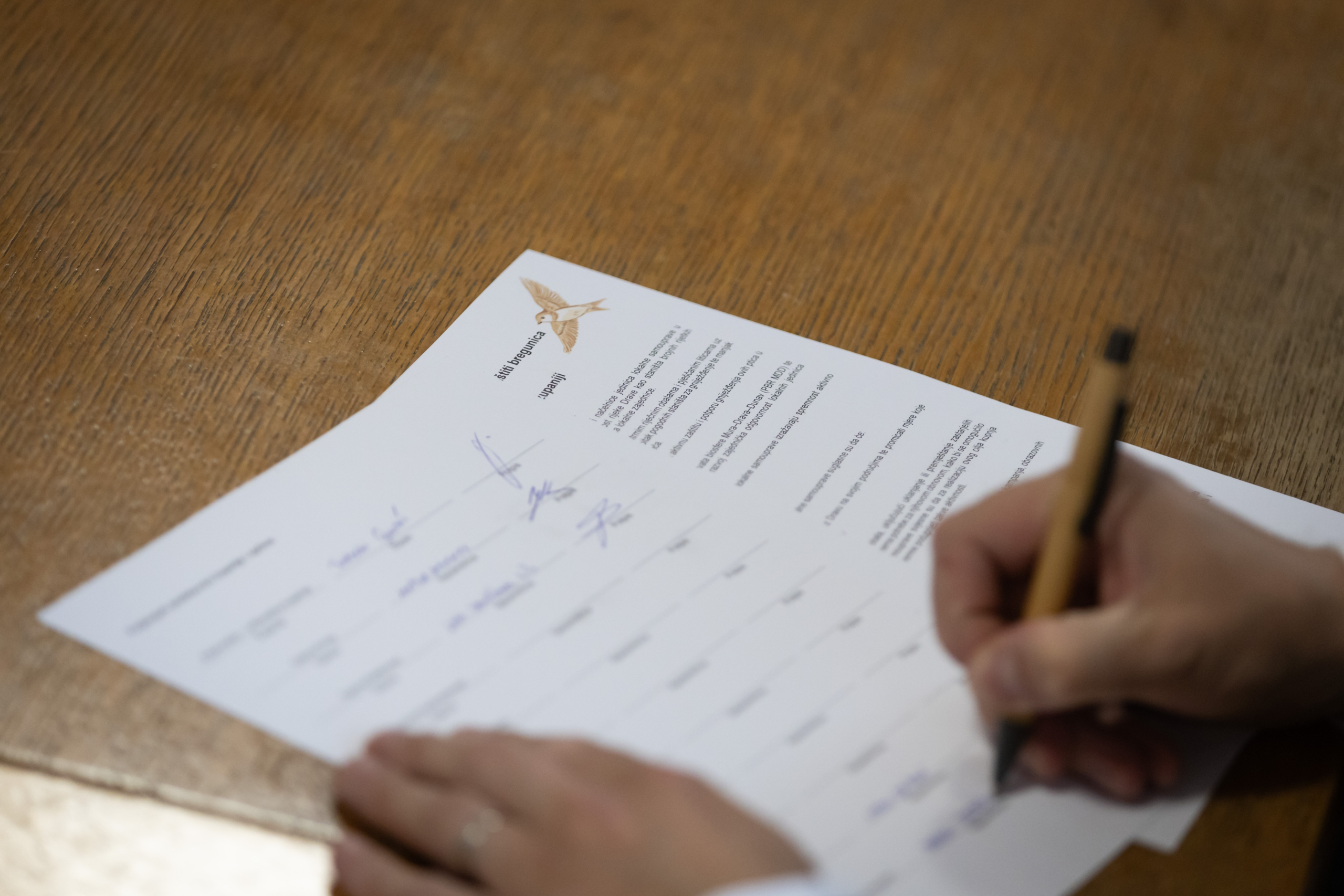
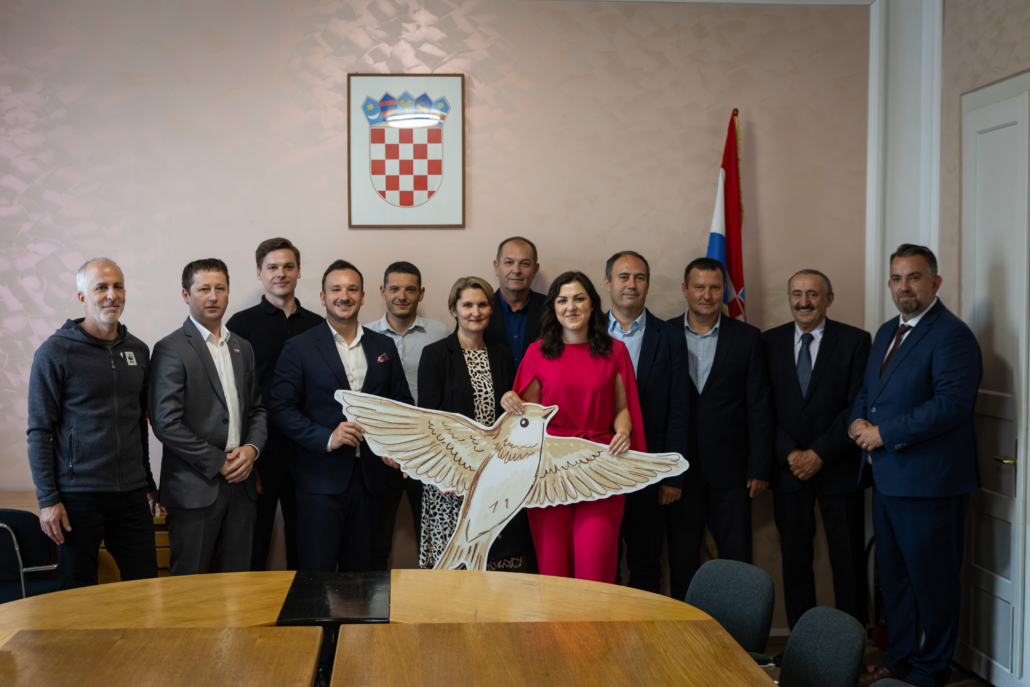 By signing the Declaration, the signatories express their support for the active protection and restoration of the natural habitats of the sand martin (Riparia riparia) — a strictly protected migratory bird whose colonies in the steep sandy banks of the Drava are one of the most reliable indicators of a healthy river ecosystem. Aware that bank reinforcement and loss of suitable nesting sites have led to population declines, the signatories commit to protecting existing colonies, raising awareness, and strengthening cooperation along the Drava and within the UNESCO Five-Country Biosphere Reserve Mura–Drava–Danube.
 MLB
MLB